Through my life, while writing book manuscripts, poetry and fan-fiction, I’ve found myself asking the same question time and time again: where am I going to get beta readers for this one? How am I going to convince friends or strangers to help and support me?
Maybe I should join a critique group, I’d think, or a discord or something. Or I’ll post on reddit about it…
So I did those things. I joined writing and critiquing sub-reddits, discords and writing groups, looking for readers. What I found instead was the answer to a question I had not yet asked: how can I help these other amazing, creative people?
I don’t wanna be all “think not what your country can do for you”, but basically that. I realised this year that I have a lot of creative friends. Not just from these new writing groups and discord servers, but people who were already in my life. People who write tech blogs, or stream video games after work, or who paint miniature figurines. People who I hoped would support me in my writing, despite the fact I hadn’t spared a thought for them or their endeavours.
I started doing more to support these friends, acquaintances and strangers. I started asking what I could do to help, and I started listening to the ways they’d been asking me to help all along.
Here are some of the things I’ve learned. They may seem super obvious, but until you get into the habit of doing them, you have no idea how truly important and effective they are.
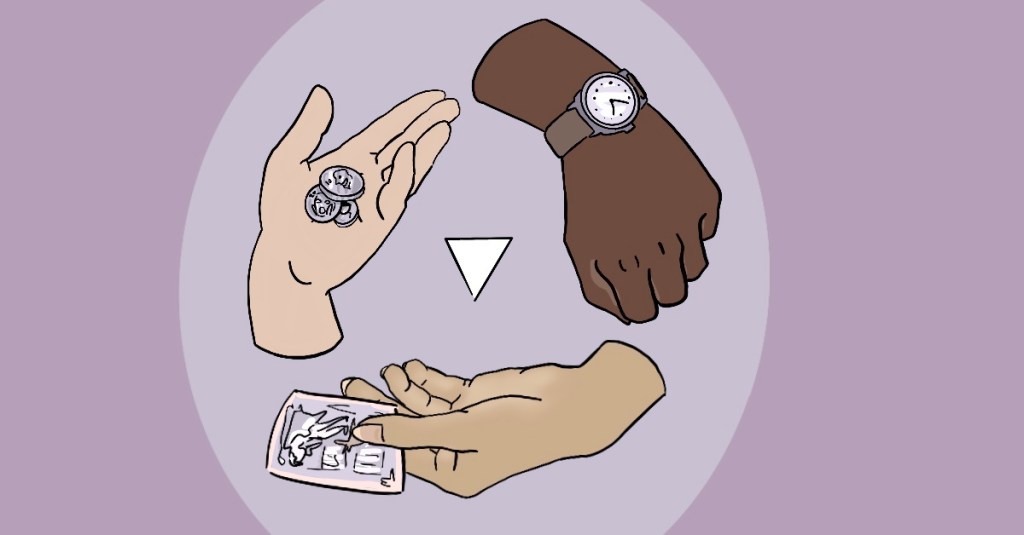
The Three Helping Hands
Time
The most straight-forward way to support a creative is to give them your time. Check out what they’re creating – 99% of the time, this is all you need to do. It’s free. It’s easy. You’re doing it right now.
- Read their blog
- Listen to their podcast
- Watch their videos or live streams
- Accept their text-message rants about how hard it is in their industry, with nods and hugs and empathy
There’s a Pro tier of Time as well, which involves boosting their creations rather than simply consuming them (although consumption is also fine. It’s up to you to decide what level of support you’re feeling for any individual creator or their work. You don’t have to go all-out for every single person you know or meet).
If your friend/stranger is putting their creative stuff out into the world on a digital platform, you probably have the ability to do some of the following things:
- Like
- Follow/Subscribe
- Share
- Comment
- Review
These actions take very little time, but can have a huge impact, especially in this world of algorithmically-decided feeds.
Your like could be the one that tips this person’s YouTube video over the threshold to being shared on more users’ feeds by the algorithm. Your comment could be the one they see at 3am, when they’re on the verge of giving up on their blog. Your review could be the one that makes the next person pick up their book.
Money
I don’t mean this in the pay-your-artists way, though you should definitely pay your artists. I mean that you can support creative people in the day-to-day of their existence using:
- Paid subscriptions (eg to twitch streams, newsletters)
- Ko-fi
- Patreon
Recurring monthly income is super duper valuable, even for people who have a full-time day job. When you’re working on projects after or around work, you’re often paying the costs out of your salary. Getting to a point where your creation pays its own way makes it less likely that you’ll have to pack it in if your financial situation changes. For example, hosting my many blogs costs over £50 a year, and every time they come up for renewal I have to decide afresh whether to keep them or not. I don’t have ads or a paid tier, but if I did and they brought in that £50, I wouldn’t need to ponder that decision at all.
It’s also great motivation, and opens avenues that might not exist otherwise: being able to afford conferences or tools to improve further; eventually going part-time with the day job, and maybe even quitting entirely to work on a creative career.
If you are able – and it’s ok if you’re not, because your other helping hands are both free and valuable – consider subscribing to things.
The first Patreon I started paying for was a coworker’s tool to help people improve at a video game I like. It cost me only £3 a month to support him, and because of the many people who did the same, he was able to quit his job and work on his passion project full time.
The latest I picked up was a substack subscription for £70 a year, to a friend whose business I think is awesome. I’m lucky to be able to afford the many tens of pounds I spend every month trying to tell people “keep going, I like what you’re doing, you’re awesome.” Hopefully I’m able to support even more of them in the future.
If spending money without a tangible, personal return isn’t your thing, that’s cool. You can also support people by paying for their goods or services:
- Back their Kickstarter campaign
- Commission their art
- Sign up to their workshops or classes
- Buy tickets to their events, or the conferences they’re speaking at
Effort
What could possibly be more impactful that Time or Money (which are apparently the same thing anyway)? Why, Effort of course. Which does admittedly take time.
Here are some of the many, many things you can spend your effort on:
- Make fanart or fan-fiction
- Provide constructive feedback
- Volunteer to alpha or beta read their work
- Become a community moderator
There are also niche ways to help out, depending on your skill-set and their needs. For example, a friend of mine has a Twitch channel, and one of his viewers is always making clips – a feature on Twitch where viewers can save portions of a stream to share and watch back later, often funny moments. This ended up being super useful when my friend was trying to expand by making YouTube Shorts with the highlight moments from his streams. He didn’t need to pore over 4 hours of video footage to find suitable moments, because they were already highlighted for him with the clips.
A particular way I like to support creative friends is by drawing content for them. I’ve drawn company and podcast logos, colouring-in pages, headers for meetup groups, book covers and more, all for free or for donations to charity. You absolutely don’t need to spend money to make a huge difference to someone’s project, or to make them feel supported.
On the other side, one of the coolest moments of the last few years for me was receiving fanart of my work from an internet stranger. She was so moved by my silly little story that she spent hours drawing the scene, full of amazing details from my writing. That small act is one of many I’ve received that keep me going as a writer, more than any like or comment, or any amount of money.
Aaand if you liked this content, please remember to like, comment and subscr- just kidding! Thanks for reading and see you next week!


 Non Hughes
Leave a reply to gardnharmny Cancel reply