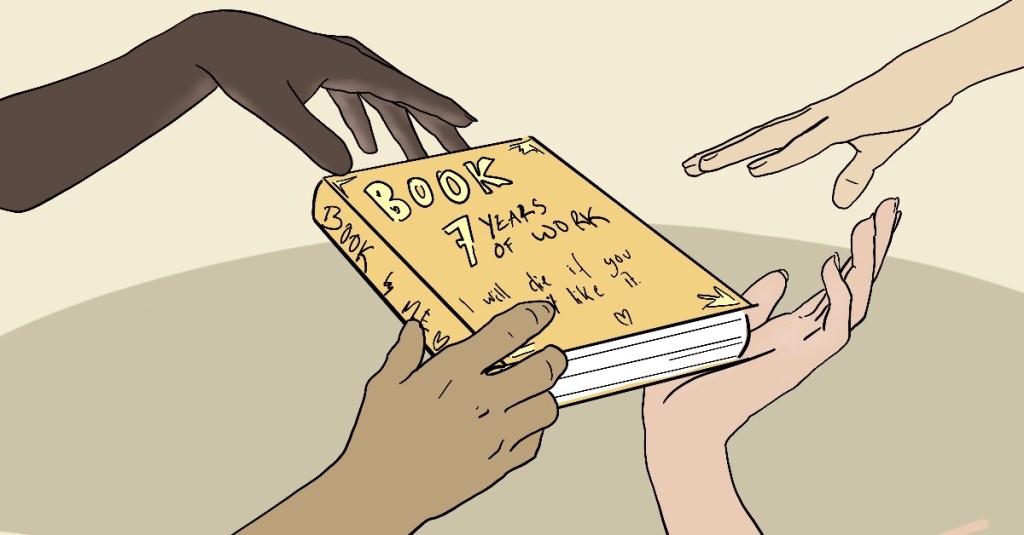
Some of the most common questions asked in writing groups and reddit subs involve beta readers: how to find them; how to know if they’re any good; what to do when you don’t agree with the feedback; dealing with rude feedback or radio silence.
A year ago I was one of those people asking questions. I received and ignored loads of great advice, spent hundreds of pounds, gave vague requirements to inexperienced readers, and ended up with a book whose fundamental flaws were only made clear by my 14th and 15th readers after 3 huge rounds of revisions… Which means that I am obviously 100% qualified to dish out my own advice.
If you read no more of this post, just remember these two important things when asking anyone to beta for you: 1. reading draft manuscripts is hard; 2. giving constructive, useful feedback is even harder.
Choosing Your Beta Readers
This is assuming that you have choices. If you can only find 1 person to beta read your novel, congrats you made your choice! Just kidding, there are loads of people out there who will read it, I promise.
The main types of beta reader I’ll be talking about are:
- Friends and Family
- Paid beta reading services
- Fellow writers
Each of these come with their pros and cons, and I’ll list them here with the note that they are generalisations based on my own experience, and each group contains a jumble of different types of readers who might be perfect or awful for your project. (People might also belong to more than one group, eg writers who do paid beta reading, who are also your friend.)
Friends and Family
Pros:
- They’re free
- They’re the easiest to come by for many writers
- They can be your biggest supporters
- They’re the best for vibe-checking your book
Cons:
- They often know nothing about writing, and have little/no experience reading books that haven’t been edited by a publishing house, meaning:
- They take the longest to give feedback
- Their feedback is not always the most useful
- They are the most likely to not finish the book
- Negative feedback feels personal, and you need especially thick skin
Of course, you might be lucky and have friends/family who are writers, or who know the ins and outs of plot structure, character, conflict and tension. In that case, the pros far outweigh the cons. You may also be unlucky and have friends/family who are only willing to read for a fee.
Most of the time you lose nothing by dishing out your manuscript to anyone you can, if only to tell you at which chapter they lose interest and stop reading. However, it can be upsetting to give your heart-book, your three-years-of-work-book, to the people you love and trust most, only to receive a “yeah, it’s fine”, or a ghosting.
Again, remember that beta reading is hard and time-consuming even to people who do it a lot. Giving feedback is especially difficult for people who don’t know writing theory, or who are afraid to hurt your feelings. Be realistic with your expectations to avoid being annoyed at people who are doing their best.
Having said that, I’ve had some top-tier feedback from friends – even (or especially) those who only managed to get through 2-3 chapters. For example, I’m pretty sure that Jam didn’t get the the end of Chapter 2, but a quick phone call told me why he was unlikely to read on: a whiny inactive protagonist. On the other end of the spectrum, I have friends who read the whole thing and said they loved it, no notes; what I learnt from them was that I should cherish these people a lot and appreciate their love and support.
Paid Beta Reading Services
This seems to be a booming business right now. Reedsy and Fiverr are the main ‘marketplaces’ for beta readers as far as I know – I am not including professional editorial or proof reading services from literary agencies in this category, or in this post at all, since they are not beta readers. The following pros and cons assume that you found genuine readers, as I’m sure there are plenty of scam artists and skim-readers around. Use your best judgement.
Pros:
- They’ll actually finish the book
- They give specific feedback, formatted and categorised nicely
- They usually know about plot, character, world-building etc
- Fast turnaround times, usually 2-6 weeks
- They are positive and friendly, because they need 5* reviews
Cons:
- They cost quite a bit, and the cheaper ones are more likely to be the literary equivalent of house flippers
- They are unlikely to tell you when your book needs a major restructure/rewrite, because they need 5* reviews
For context on price, I got decent reads from two beta readers on Fiverr, costing £180 and £250 for an 85,000 word manuscript. Both gave well-structured, insightful feedback. I have not tried Fiverr/Reedsy readers at other price points, and would be wary of anyone offering to read a full book manuscript for less than £150. The price will reflect how much time and thought they are dedicating to the project, and anyone charging less is probably not spending much time on each manuscript.
I did enjoy the process of paid beta readers the most out of all the groups, simply because the structure and expectations were laid out clearly from the outset. I hand over money. They go away and read the book, then send a written document of feedback before an agreed deadline. I read the feedback in my own time, and we part ways as I decide what to do with it. Clean.
Generally, if you have the money to burn then you’ll probably get something out of it. I was happy with the service I got at the time, although later I did come to realise that they’d both positive-skewed their feedback. That’s not to say they didn’t point out areas for improvement – one of them gave me the most useful single insight I received, helping me to fix a huge issue with my book’s ending – but they tended to focus on easy to fix mistakes in individual scenes, rather than telling me I had a saggy middle with a passive character that needed to be entirely rewritten.
Fellow Writers
Pros
- They are the most knowledgeable
- They’re the most likely to give you the feedback you actually need to hear
- They’re used to reading draft manuscripts, and will likely read the entire book
- They know and appreciate how hard you’ve worked to make this manuscript
Cons
- This can be the most difficult group of people to find
- Varied personalities, feedback styles and opinions mean it’s a hit-and-miss process to find a good match
It was my fellow writers who made the biggest impact and showed the most knowledge and insight (thanks Ingrid, Brennin, Ed!), even though I only sent them the first 3 chapters to read. They understood my goals and responded with candour. While it was this round of feedback that made me step back and see that the book was too fundamentally flawed for me to want to work on more right now, which I think maybe made them feel a bit guilty, it was what I needed. (They didn’t tell me the book was rubbish. They told me it was great, and helped me see how I could make it even better, and I learned so much from just three chapters of feedback that I realised I would need to do another super deep whole-book edit to fix the same problems in the other 40 chapters. I chose instead to apply those lessons to my next project.) (I also felt/feel a lot guilty about putting the book aside after getting them to spend so much of their time helping me with it. Sorry!!!)
It can probably be argued that writers aren’t a third group, but an extra trait added to either ‘people you know’ or ‘people you pay’, since the writers mentioned here are also friends. One of them is a writer and a friend, AND I paid them, so the holy trinity. It’s totally possible to meet fellow writers in critique groups or subreddits, and exchange works without being friends though.
Unfortunately, it can take a long while to find beta readers you vibe with, who read in your genre and give feedback in the specific way you like to receive it. The more you take part in the writing community, the more of these wonderful people you will naturally find. Talk to people on forums, join writing groups in person or online, follow authortube creators, join discord servers. In my experience, both in writing- and tech- communities, engaging authentically and with interest will always result in people engaging back with you.
I didn’t join any groups or forums with the intent of finding beta readers. In fact they were the last people I asked because I was afraid they’d see what friends, family and fiverr’ers had missed: that I am a poopy butt writer and my book is a big old turd. I’m super glad I did ask them for help in the end, though. 10/10, I should never have been afraid.
Preparing your Book
When wondering if your book is ready for beta readers yet, the main question to ask is “what do I want to get out of this?”
Writers look for beta readers for all sorts of reasons, though mostly when they’ve written and edited a full manuscript and can’t see what else needs doing to it. You call in a beta reader to point out the problems you’ve missed, not the ones you you know about and are ignoring for now.
(Unless what you’re looking for is support and positive feedback to give you the energy to fix said problems, in which case carry on.)
You should not send a beta reader your book if it is riddled with grammatical errors and typos. That’s not to say it has to be a masterpiece before anyone is allowed to read it, but you should solve all the easily spotted issues yourself, such as:
- changing tense or pov by mistake
- spelling errors
- basic grammar
For spelling and grammar, just fixing all the little red underlines in a bog-standard word processor is good enough. Your book is likely to change quite a lot at this stage, so there’s no need to painstakingly edit every sentence to bare, profound perfection unless you really want to.
You should also solve any larger problems you know about, unless you’re genuinely not sure if it’s a problem or not, or are looking for input to help you work out how to resolve it. This includes asking questions like:
- is the main character driving the plot forward, or is the plot just happening to them?
- do all of the side characters add something distinct to the book, or can some of them be removed or merged?
- do the plot points hit how I want them to? Are they all necessary for the plot?
- is the book an appropriate length for my genre?
It’s not the end of the world if you send the book out with known problems along those lines, so long as you’re fine with all your beta readers telling you what you already know, potentially using up feedback time they could have spent telling you the stuff you don’t already know. It’s also totally natural to be in denial at this stage of the writing process, and think that your book is the exception to whatever wisdom you broke. Beta readers can be useful for fixing destructive optimism…
As for formatting, everyone will have preferences for how they like to read. Sharing a google doc or word doc will allow them to highlight and write comments as they go, sharing specific examples of problems they find, or things they love about your book. On the other hand, this makes it easier for them to focus on the little things when you’re looking for the big picture issues. If you’re using friends and family, they might struggle with a huge doc like that, and you’d be better off creating an epub file that they can import onto their eReader. (You can use Calibre, a free tool, to convert any doc to ePub format, just so you know.)
Preparing your Beta Readers
Have realistic expectations. These expectations will depend on the type of beta reader, along with other things you know about them. If you’re sending to a family member who historically has talked the talk without walking the walk, then you need to accept the very real possibility they might not get round to reading for you – and that’s ok, and doesn’t make your book rubbish, or them evil.
Questions to ask yourself about your reader:
- how much experience do they have with beta reading specifically?
- how much do they know about writing, plot, characterisation?
- are they my target audience / a reader of the genre?
This isn’t to measure their value as a beta reader, but to ensure that your expectations are fair for their feedback. Not everyone is going to read your book. Not everyone is going to come back with that one critical piece of feedback you really need to hear right now. Not everyone is going to work on your timeline. Make yourself as zen as possible with all possibilities.
Once you’ve set expectations for yourself, you need to communicate your expectations to them.
Depending on the experience of your beta reader, they may need to be given some extra information, to help them help you. This might include:
- a quick reminder that this is not a professionally edited book like they might be used to, off the shelf
- a preferred timeframe for reading and giving feedback
- the specific kind of feedback you’re looking for
When I beta read for my mate Ed, he sent around a google form afterwards with specific questions about the themes of the novel. Part of the feedback I’d been prepared to give was about some random-feeling scenes in which the characters discussed their histories, which otherwise didn’t seem to impact the book. Upon reading the form questions, I realised that the effects of the characters’ upbringings were supposed to be a core theme of the novel, and so I was able to give more useful feedback than I otherwise would have, ie “these themes didn’t impact the character’s decisions in ways that matter to the plot” instead of “these scenes didn’t add to the plot”.
You can specify the type of feedback you want before or after they’ve read the novel. For the above example, it made sense to ask the question about themes afterwards, or else my reading of the novel would have been skewed by knowing the core theme ahead of time. Same if you have questions about specific plot points: “did it feel out of character when my MC killed the antagonist, or was it ok?”; “did you understand the overarching joke framing the fourth chapter?”; “were any of the place names in the book annoyingly confusing to pronounce?” On the other hand, if you want general plot and characterisation assessments, then you might as well ask your questions up front so the readers can make relevant notes as they go.
One thing I always tell my readers, no matter how experienced they are, is that I don’t want notes about typos, grammar, spelling etc. Not because I think my grammar is flawless, but because it’s time consuming for everyone, and there’s a 90% chance it won’t provide any value because other feedback I get will probably prompt me to rewrite the scene anyway.
Taking Feedback
So you’ve found a few people to read your book, and now the responses are dribbling in… and they’re a lot. A lot of nice things, sure, but also a lot to improve on. Panic starts to set in – people have problems with the start, the middle, the end, the prose, the character, the themes and the setting. Some of your readers just didn’t ‘get’ the book, and their feedback doesn’t make sense for the genre, age or your vision for the story.
Where do you go from here? How do you work out what feedback to action or ignore? What do you sort out first?
Well, the first thing you do is read through it once, thank the reader, and then put it aside for a few days. This is the hardest thing.
So many times, I’ve gone straight into action mode to fix problems, only to realise that I liked my story better before. For example, the opening scene in one of my manuscripts is based on the Welsh legend of the Twrch Trwyth. After feedback from a reader that it didn’t make sense, I deleted the chapter… and then the following week put it back in.
On the other hand, I’ve thrown away feedback on first read, only to come back to it months later with a bashful nod. Oops, yes, you’re right that I started the story in the wrong place (the wrong setting, that is, not at the wrong plot event). I just reeeeeeally like my descriptions of that misty island, okay? Don’t make me delete them! Nooooo!
It’s worth being honest with yourself ahead of time about how much constructive criticism you’re able to take. Thick skin takes a long time to develop, and writing can feel super personal. Change suggestions can feel like attacks not just against your book, but against you as a writer and as a person. You have to be prepared for it, or have a conversation with your beta readers about how much negativity you can take.
At the end of the day, you’ll need a growth mindset to succeed – but it doesn’t have to be the end of this day. Maybe this day you meet yourself where you’re at and practice receiving mildly worded thoughts of maybe improvements between a lot of compliments. And then tomorrow you can take the criticism, and the day after you can take the hate, and accept it impersonally and learn and grow so you don’t make the same mistakes again in your next revision or next project. You can only improve when you give yourself the space to improve.
If you’re worried that you won’t know good feedback from bad, here’s a general rule of thumb to follow:
- 100% of the time, a beta reader knows that something is wrong
- 50% of the time, they know what is wrong
- 10% of the time, they know how to fix it
For example, one beta reader for my book said that the pacing of the ending was off and it didn’t feel dramatic enough. I started trying to tighten up the action, but nothing I did made a tangible difference. I couldn’t fix the ‘pacing issue’ no matter how hard I tried!
A few weeks later, a second reader told me that the ending lacked urgency because the antagonist was not an active participant in it. Light bulb moment. Oh! Through all these edits, I hadn’t noticed it at all: the main antagonist of the book sets off a hunt in the climactic scene… and is then not mentioned again for 10 pages as my protagonist runs around the underworld.
Both readers had correctly identified that there was a problem, but only one of them had correctly identified the cause. Once I wrote the antagonist more closely into the scenes and made his actions directly influence the way the main characters try to meet their goal, the whole last quarter of the book felt more urgent.
If not for the second reader, I’d probably still be working on those scenes now, spinning wheels trying to tighten up my writing more and more without seeing the real issue.
If at all possible, wait until you have feedback from a few people before you start actioning things. The more feedback you have, the easier it will be to filter out personal opinions that don’t work for your book or genre, and the clearer your overall picture of the required changes will be.
Then it’s up to you how you want to work through them: from biggest to smallest, or from easiest to hardest, or starting with the ones that excite you the most.
The last note I’ll leave you on, is that feedback can be exciting. It’s stuff you didn’t know, that can make you go “oh wow yeah changing that would be awesome!” I mean, it can also be depressing and sloggy, but shh. Awesome, exciting, inspiring. The goal should always be, for both writer and reader: how can this story be even better?
 Non Hughes
Leave a comment